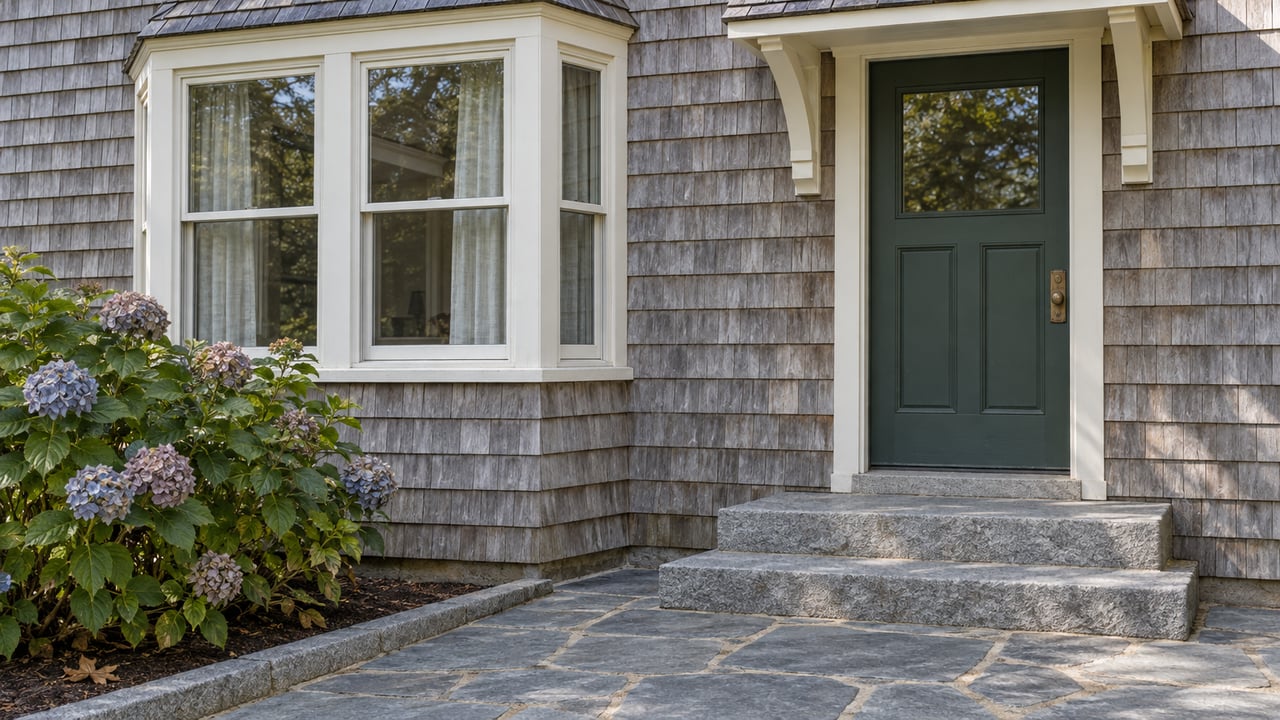
South Kingstown now requires registration for residential rentals across town, and its fee schedule sorts each unit by the shortest stay it hosts. A beach cottage leased from September to June and then rented by the week in July pays the same $300 town fee as a cottage rented weekly all summer and left empty the rest of the year. A cottage with only the nine-month lease and no summer weeks pays $50.
That difference is small next to a purchase price. It matters because the same 30-day line also runs through state registration and Rhode Island's short-term rental taxes, and each of those draws the line a little differently. Anyone buying a South Kingstown property with rental income in mind is buying into all three.
The February vote that settled the hybrid question
The Town Council adopted the rental registration ordinance on October 14, 2025. It sits in the zoning ordinance as Article 5.5, Rental Dwellings, Sections 550 through 553. It applies to rental dwellings and units throughout town. The exceptions are hotels, motels and tourist homes licensed under Chapter 18, along with institutional dormitories. When the ordinance was being drafted, the town clearly expected seasonal patterns. The September 2025 draft registration form asked owners for the occupancy period and offered "summer, September to June, or other" as examples.
The original fee language listed two categories, rentals of 30 days or less and rentals over 30 days, and said nothing about a unit that falls into both. At a special session on February 26, 2026, the council approved clarifying language, reported by Citizen Portal. Units rented for 30 days or less during any portion of the registration period are assessed the short-term fee. The town's posted Schedule of Fees, marked amended June 22, 2026, carries that sentence word for word.
The reasons the town gave for the registry explain why the line falls at the shortest stay. Town Solicitor Michael Ursillo told The Independent that "the idea of a rental registration ordinance is to get your arms around what the circumstances are out there currently, so that we are aware of what units and how many are being used for rental purposes." The same report says Town Manager James Manni pointed to the need to measure the balance between owner-occupied homes and rentals with a revolving door of occupants. Under that reasoning, a single week of turnover is the activity the town wants counted.
Same cottage, three calendars
Here is how the current fee schedule treats one hypothetical single-unit cottage under three common rental patterns. The figures are the town's posted fees.
| Rental pattern for the year | Shortest stay | Town category | Annual town fee |
|---|---|---|---|
| Year-round lease to one household | Over 30 days | Long-term | $50 |
| September–June lease, then July and August booked by the week | 7 nights | Short-term | $300 |
| Weekly summer rentals only, vacant otherwise | 7 nights | Short-term | $300 |
| Two-unit house: one unit leased all year, one unit with summer weeks | Varies by unit | One long-term, one short-term | $350 |
Long-term units have a ceiling: the $50 fee stops at $1,000, or 20 units, for any one owner. Short-term units have no cap in the posted schedule. Units owned by the South Kingstown Housing Authority and deed-restricted affordable units are exempt from the fee. The registration form also asks for a maximum tenant count. The materials we reviewed contain no townwide numerical occupancy limit.
So the gap between the second row and the first is $250 a year. The town fee is the smallest piece of what that summer week sets off.
The state draws its line at the same number, with a different trigger
South Kingstown's registration portal asks short-term rental owners directly whether they have also registered with the State of Rhode Island under R.I. General Laws 42-63.1-14. The state requirement covers short-term rentals listed on a third-party hosting platform for stays of no more than 30 nights at a time. Under the Department of Business Regulation's rule, registration costs $25 and renewal costs $25. A registration lasts one year from the date it's issued, and each whole-unit rental gets its own registration.
The number is the same and the trigger isn't. The town fee applies to any rental of 30 days or less during the registration period. State registration is tied to a platform listing. A summer week booked privately and a summer week booked through a hosting platform look the same to the town. They may not look the same under the state registration rule.
Taxes follow the length of the stay. The Rhode Island Division of Taxation's August 2025 advisory set out two changes that took effect January 1, 2026. For a whole house, condo or apartment rented short-term, the stack now looks like this:
- 7% state sales tax, unchanged.
- 5% whole-home short-term rental tax, a new tax charged on the total rental charge for a residential dwelling rented in its entirety. It replaces the 5% state hotel tax for whole-home stays, so no single stay pays both.
- 2% local hotel tax, up from 1%. It applies to all short-term rentals, hotels included.
The Division's March 2026 guide, The Hotel Industry and Rhode Island Tax, applies these to rentals of 30 days or less and puts the total at 14%. Rates follow the occupancy date, not the booking date. A July 2026 week booked and paid for in 2025 was still subject to the 2026 rates, and the advisory says the difference is collected at checkout. Who collects and remits depends on how the rental is booked. That question belongs with a tax professional, and nothing here answers it for a particular property.
Put the layers together and the summer weeks behind a September-to-June lease carry the town's short-term fee, possibly a state registration, and a 14% tax on those stays. The nine months of lease carry none of the short-term taxes.
What a buyer picks up at closing
The ordinance says no rental unit may be let, leased or occupied by a tenant "unless and until the record owner has registered such property with the zoning official." The filing duty sits with the record owner. When a sale closes, that duty moves to the new owner along with the deed.
The state is more explicit. Its registration can't transfer to a new registrant. On a change, the existing registration is terminated and the new registrant applies on their own.
Timing on the town side matters for anyone closing in spring or summer. A unit registered outside the annual window is valid only until December 31 of that same year. A buyer who registers after a June closing to keep booked summer weeks going files again in December for the following year. A cottage marketed with "summer bookings in place" brings both registrations into the deal. The septic deadlines that already shape South Kingstown negotiations belong in the same due-diligence folder.
Enforcement exists on paper. The town FAQ says enforcement staff will investigate properties that haven't registered, and violators face a fine and a possible court summons. The Independent reported the fine for failing to register as $300. We found no published figures on how many units registered after the first deadline or how many fines have been issued.
The first renewal window opens November 30
The first registration cycle ran long. The original December 31, 2025 deadline was extended to March 31, 2026. The ordinance's standing calendar takes over from here:
- November 30 through December 31, 2026: annual filing window for the 2027 registration year.
- January 1 through December 31, 2027: period that registration covers.
- After December 31: a $300 late fee, in addition to any other penalties under Article 9.
Owners who added summer weeks in 2026 to a property they registered as long-term in the spring are the ones most likely to see their category change this cycle. Owners can register online or in person at the Building & Zoning Department at Town Hall. According to The Independent, the department's staff includes Building & Zoning Official Jamie Gorman, Zoning Enforcement Officer Joshua Brother and Zoning Associate Benjamin Barbera, and its line is 401-789-9331, ext. 1225.
Quick answers
Didn't South Kingstown stop enforcing short-term rental registration a couple of years ago? It paused one. In November 2024 the town said it would not enforce its earlier short-term rental registry after a court enjoined Narragansett's ordinance. The townwide registry adopted in October 2025 is a separate, broader measure that covers rentals of every length.
Does a long-term lease to one household pay anything? Yes, $50 per unit a year, unless the unit falls under the Housing Authority or deed-restricted affordable exemption.
Does the registration have to be posted at the property? Not currently. The town FAQ says the ordinance doesn't require it.
If you're weighing a South Kingstown cottage or a two-unit house, how it has been rented matters as much as the asking price. Erkkinen Cohen Group can go through a property's rental history and registration status with you before an offer goes in, so the summer calendar is part of the numbers from the start. Contact Us to talk it through.
This article is general information, not legal, tax or financial advice. Consult a qualified professional about your situation.
